
When Design Saves Lives
The Client
PinnacleHealth, a not-for-profit health system serving Central Pennsylvania
The Brief
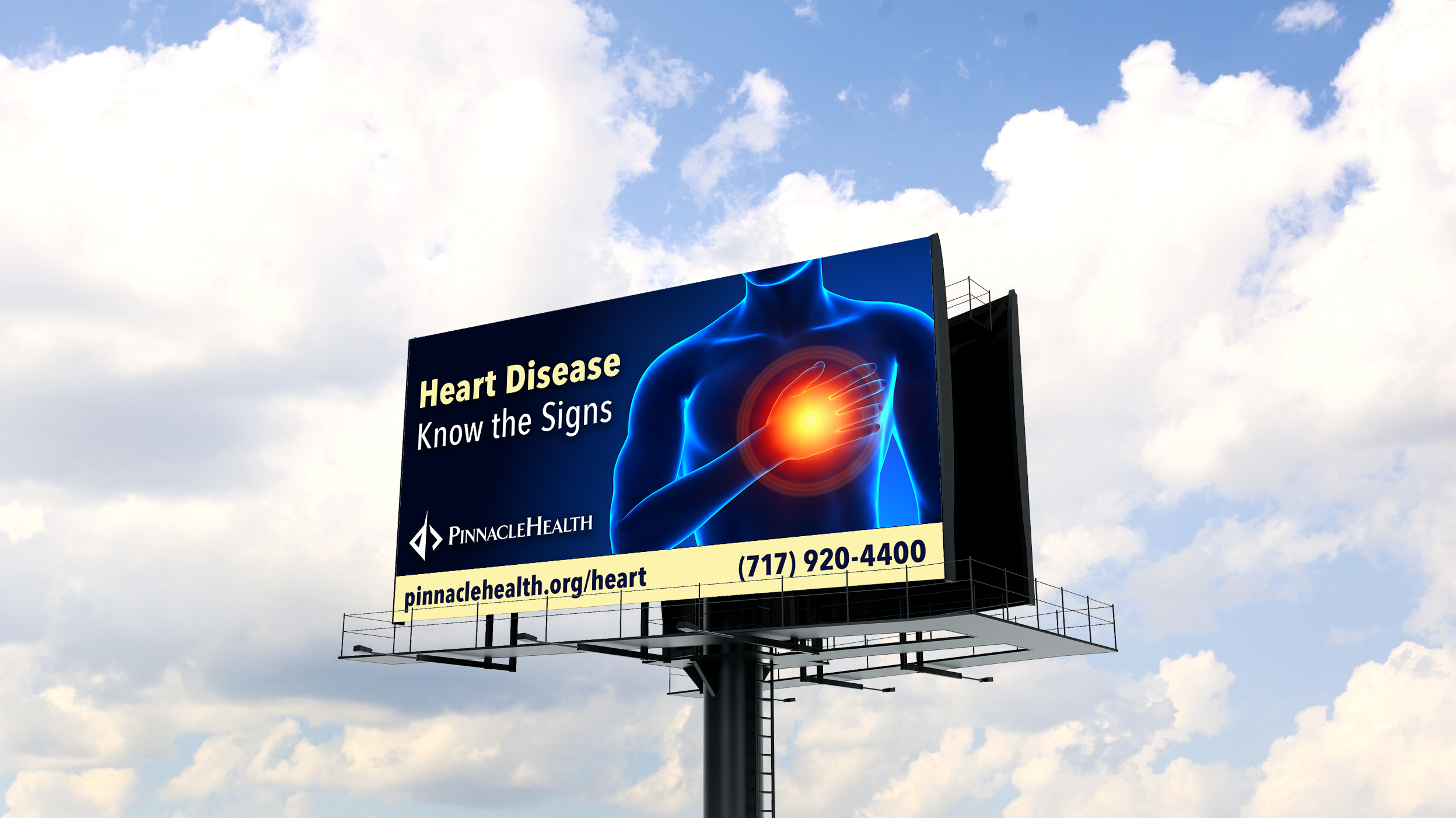
Design a Heart Month billboard campaign for PinnacleHealth's CardioVascular Institute targeting adults 40 and older.
Goal: drive awareness and prompt action (specifically, contacting the Institute for more information).
The Decision That Mattered
The client wanted a website call-to-action. The research said otherwise.
Pre- and post-visit survey data showed the target audience's preferred contact method was phone. Combined with the billboard's highway placement (where entering a URL in a web browser is dangerous, not to mention impratical) the data pointed clearly to a phone number as the more effective call-to-action.
I advocated for the research. The final design included both the website and the phone number.

The Result
Greg. 47. Office worker. Avid golfer.
Driving to work, Greg noticed the pain point shown on the billboard matched what he'd written off as golf soreness. He used his car's hands-free calling to dial the number directly off the billboard. That call connected him to the Cardiovascular Institute — and eventually to the surgeon who performed open-heart surgery to treat a previously undiagnosed major heart condition.
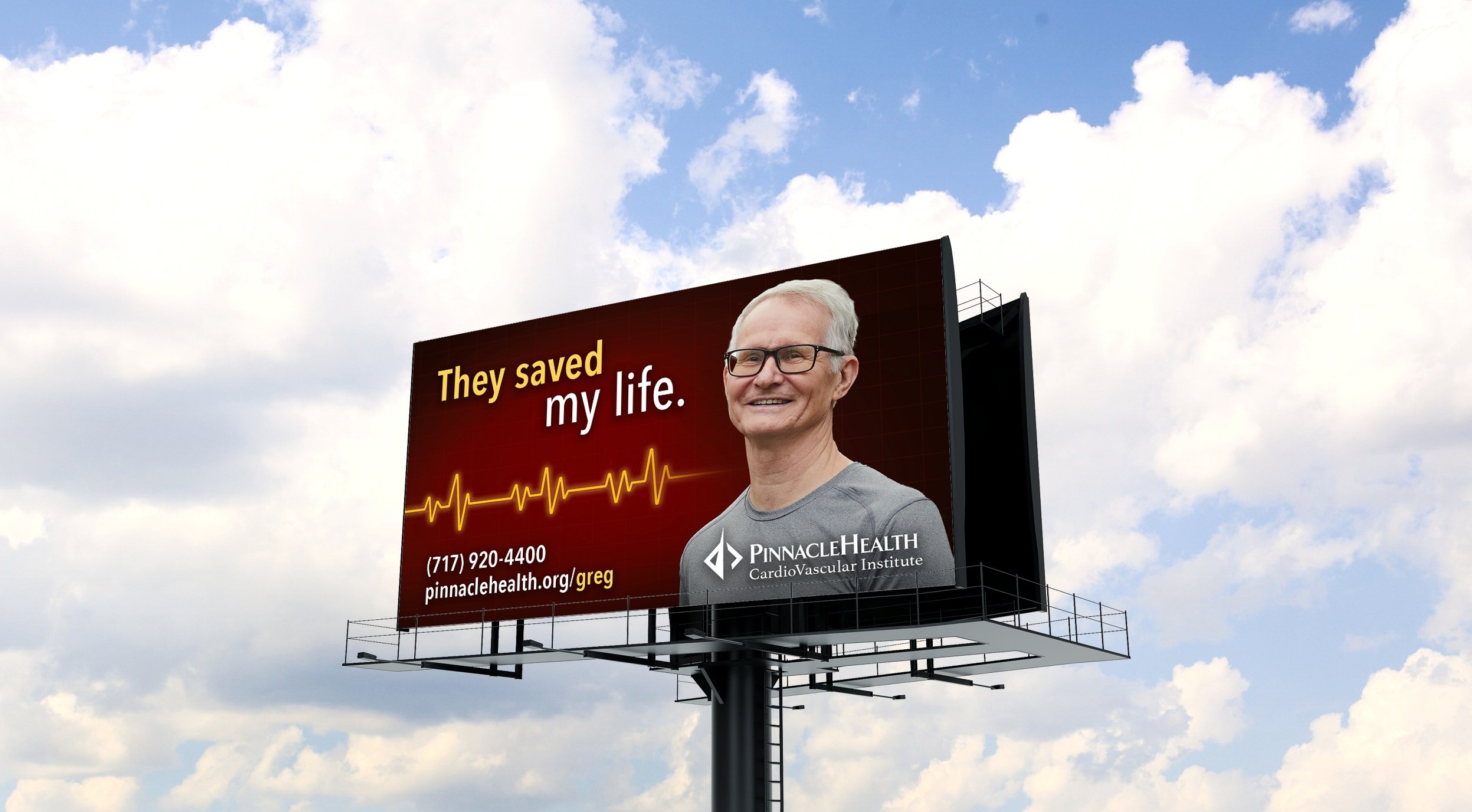
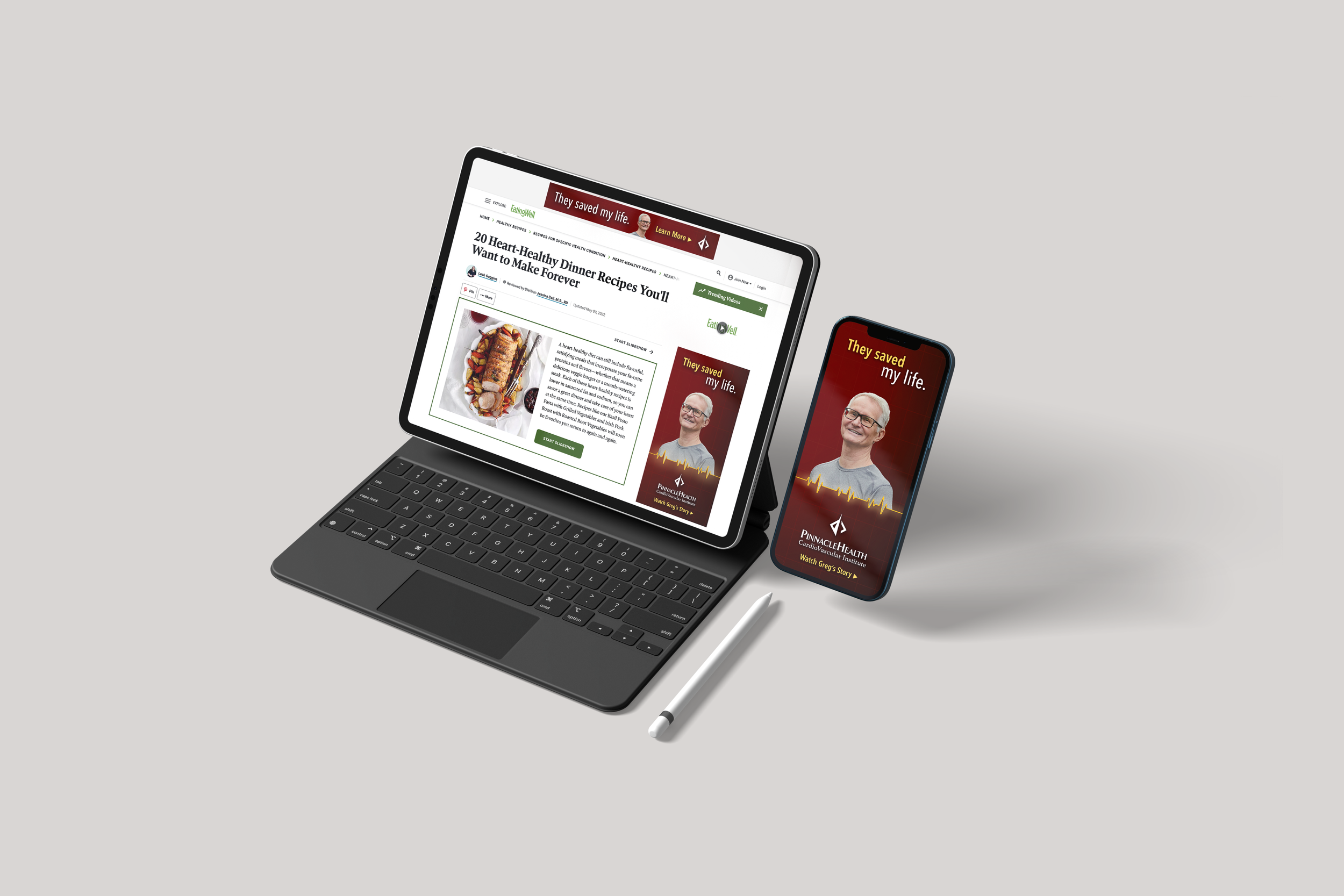
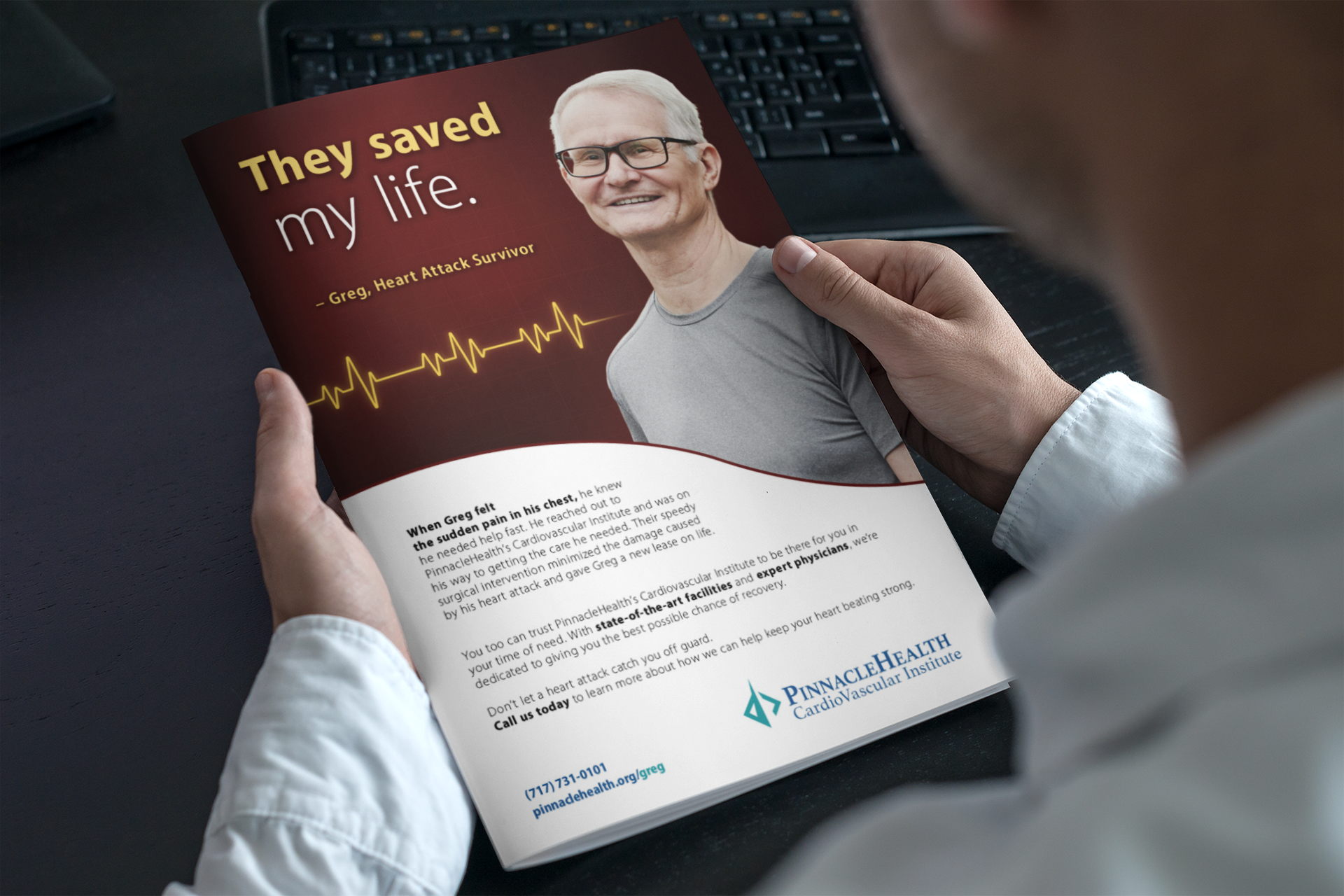
After recovering, Greg agreed to become the face of the follow-up campaign. With one condition: the phone number had to stay.
I designed the follow-up campaign’s billboards, print ads, and web ads featuring Greg.
What this Demonstrates
Design informed by research doesn't just look better, it performs better.
This project is the clearest possible example in my career of what happens when a designer pushes back on client preference in favor of listening to the data.